Quay lại giao diện cũ
Phần 1
(7 câu)Listen and write the correct answer. No more than ONE word or number in each blank.
New cooking programme
Name of programme: Cooking for Beginners
Day of programme:
Start time:
Total number of shows:
Things to cook: cakes, main courses and
Date of first programme: the July
Choose the correct answer to complete the sentence.
The soup is a bit too salty for me, but some people might enjoy its strong ____________.
I don't like ____________ food because it's too hot for my taste.
I love having a ____________ of cereal with milk in the morning.
Sushi is a popular Japanese dish made with raw fish and rice ____________ in seaweed.
Coffee is a stimulating ____________ that many people enjoy in the morning to wake up.
Pho is a popular Vietnamese noodle soup made ____________ beef or chicken, rice noodles, and flavorful broth.
____________ chicken is a popular dish made by cooking chicken in hot oil until it becomes crispy and golden.
Choose the correct answer that has the CLOSEST meaning to the underlined part.
The chocolate cake at the bakery is delicious with its rich and sweet flavor.
Che is a Vietnamese sweet dessert soup made with various ingredients like beans, jelly, fruit, and coconut milk.
Choose the correct answer that has the OPPOSITE meaning to the underlined part.
Bun cha is a popular Vietnamese dish featuring grilled pork patties, vermicelli noodles, fresh herbs, and a dipping sauce.
Vietnamese coffee is known for its strong and rich flavor, often served with condensed milk and enjoyed hot or iced.
Choose the correct answer to complete the exchanges.
A: Would you like to have lunch with me?
B: ____________
A: May I try some of your soup?
B: ____________
Write the correct form of the words in the brackets.
I like snacking on popcorn while watching movies. It's salty and addictive. (crunch)
Fruit salad is a refreshing of different fruits, often served as a healthy dessert. (mix)
Read the text and choose the correct answer.
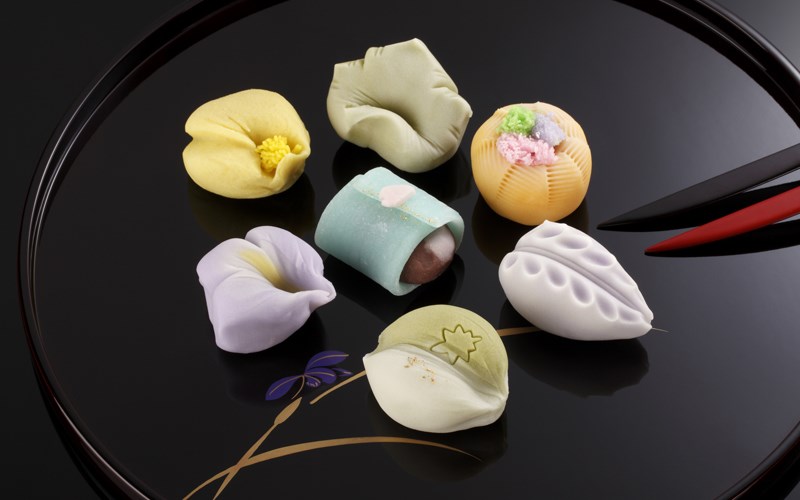
1. In Japan, many people eat wagashi for dessert. Wagashi are traditional Japanese sweets. Unlike a lot of American candy, wagashi are mostly made of natural ingredients. One very common ingredient is a sweet paste usually made from beans, sweet potatoes, chestnuts, or fruit.
2. Professional wagashi makers often decide on the ingredients and decorations of wagashi according to the season. In the springtime, cherry blossoms grow all around Japan. In the fall, maple trees turn bright orange and red. Wagashi makers use these plants as inspiration during these seasons.
3. There are many different types of wagashi. One popular type is nerikiri. Nerikiri is made from sticky rice flour, sugar, and white bean paste. It is sometimes molded into shapes of flowers, birds, or leaves. People often eat nerikiri and other wagashi with green tea.
4. A lot of professional wagashi makers have taken many years to learn all of their skills to make wagashi. These sweets are very delicate and beautiful.